
A low-slope roof needs a complete water-management plan
On a low-slope roof, the membrane and drainage work together. The waterproof covering needs continuous details around openings and edges, while drains or scuppers provide a route for water to leave the roof. A scupper is a drainage outlet through a roof-edge wall.
These details matter on a small roof section as well as a larger roof. Tell us whether the affected area is over living space, a garage, an addition or another part of the building. Also identify any adjoining sloped roofs that connect to it.
Where torch-on roofing fits
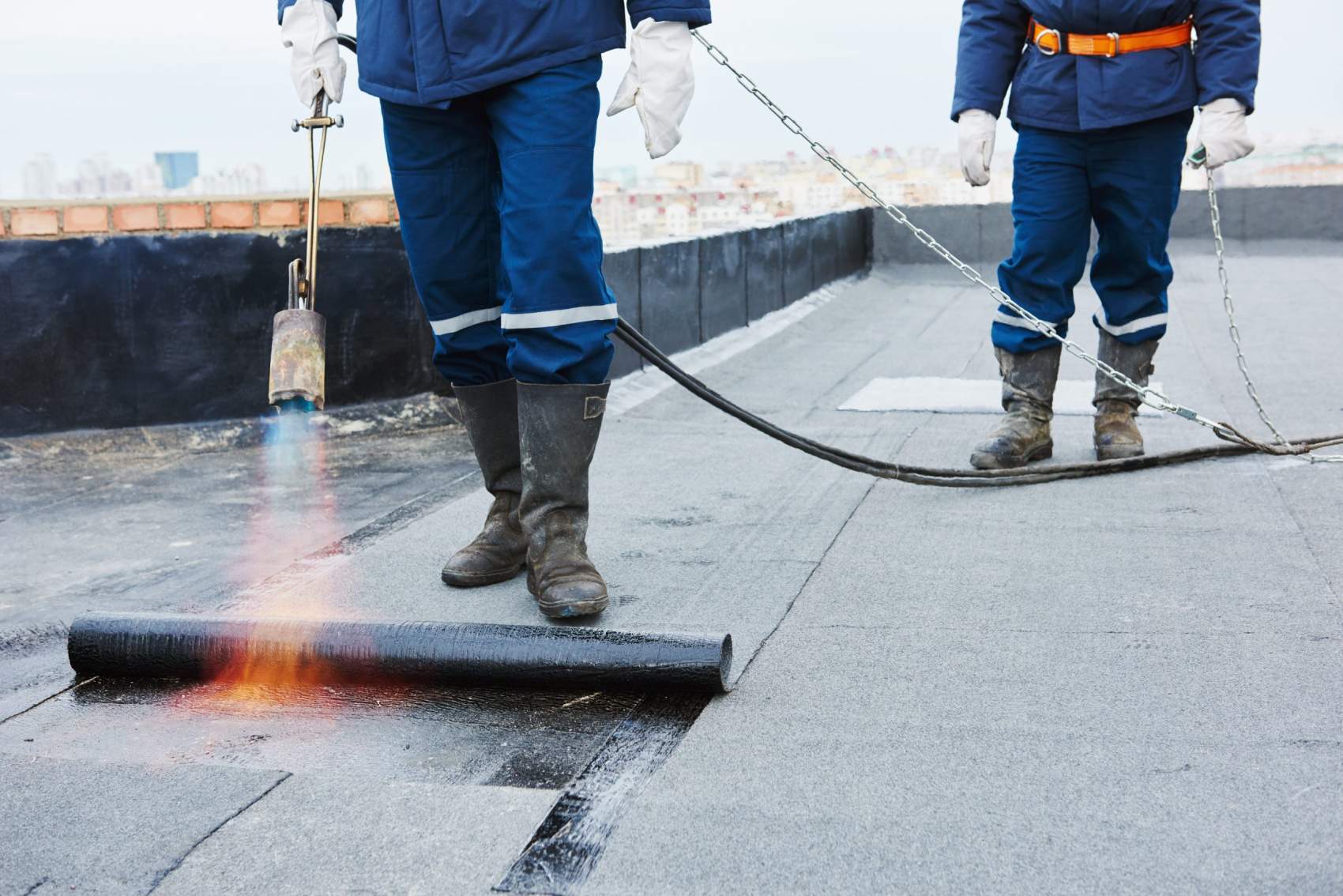
Torch-on is a method used to bond suitable modified-bitumen roofing membranes with heat. It isn't a description of every low-slope roof, and it isn't automatically suitable for every location on a building.
The existing materials, supporting layers and nearby construction need assessment before the proposed system and application method are chosen. Details around walls, openings and combustible materials require particular care. Our service includes torch-on roofing, but the actual specification needs to fit the property.
When requesting a quote, ask what membrane system is proposed, which layers are included and how its connections will be completed. That gives you more useful information than the phrase "new flat roof" alone.
Drainage and connections deserve their own review
A membrane can look reasonable across an open area while a drain connection or perimeter detail needs attention. Assessment should consider the path to the outlets, the condition of seams and the transitions around raised roof-edge walls, vents and other openings.
Water remaining on the surface, a recurring leak near a drain or an area that repeatedly needs patching should be reported. The cause needs to be established before deciding whether the answer is maintenance, a local repair or a broader change.
NorthVan Roofing's low-slope scope includes drain and scupper detailing, perimeter flashing and repairs around roof penetrations. The estimate should define the drainage work and identify any requirements beyond the roof-level outlets.
Repairing an isolated fault or replacing the membrane
A focused repair may suit a local defect where the surrounding roof can accept a compatible repair. Open seams, splits and recurring wet areas need assessment in the context of the existing system, not just another layer of an unspecified patching product.
When deterioration is spread across the roof or repeated repairs leave the underlying problems unresolved, replacement becomes a different conversation. The proposal should explain which materials will be removed, retained or renewed and what must be checked beneath the covering.
For a current leak, start with roof leak repairs and describe when and where water is appearing.
Planning the scope for your building
Roof access, nearby occupied areas and any equipment on the roof belong in the initial discussion. Share existing reports or records that identify the roof material, installation history and past repairs.
For a managed property, our commercial and strata roofing page covers the coordination questions. The low-slope system still needs assessing on its own merits, regardless of who owns the building.
After the immediate work, low-slope roof maintenance enquiries can address condition reviews and future priorities. Confirm the proposed tasks rather than assuming that drainage cleaning or every minor repair is included in a visit.
Flat and torch-on roofing questions
Does a flat roof have to be completely level?
No. "Flat" is a common description for a low-slope roof, not an instruction to leave it without drainage. The roof needs a suitable route for water to reach its outlets. Existing drainage concerns should be part of the assessment.
Can you apply torch-on over any existing roof?
No. The existing system, its condition and the suitability of the supporting materials need checking. The estimate should state the proposed approach rather than assume that applying another layer is appropriate.
Is standing water always a sign that the whole roof needs replacing?
Not by itself. Drainage layout, blockages and roof condition need investigation. Report where water collects and any related leaks. A repair or replacement recommendation should address the cause, not rely on that observation alone.